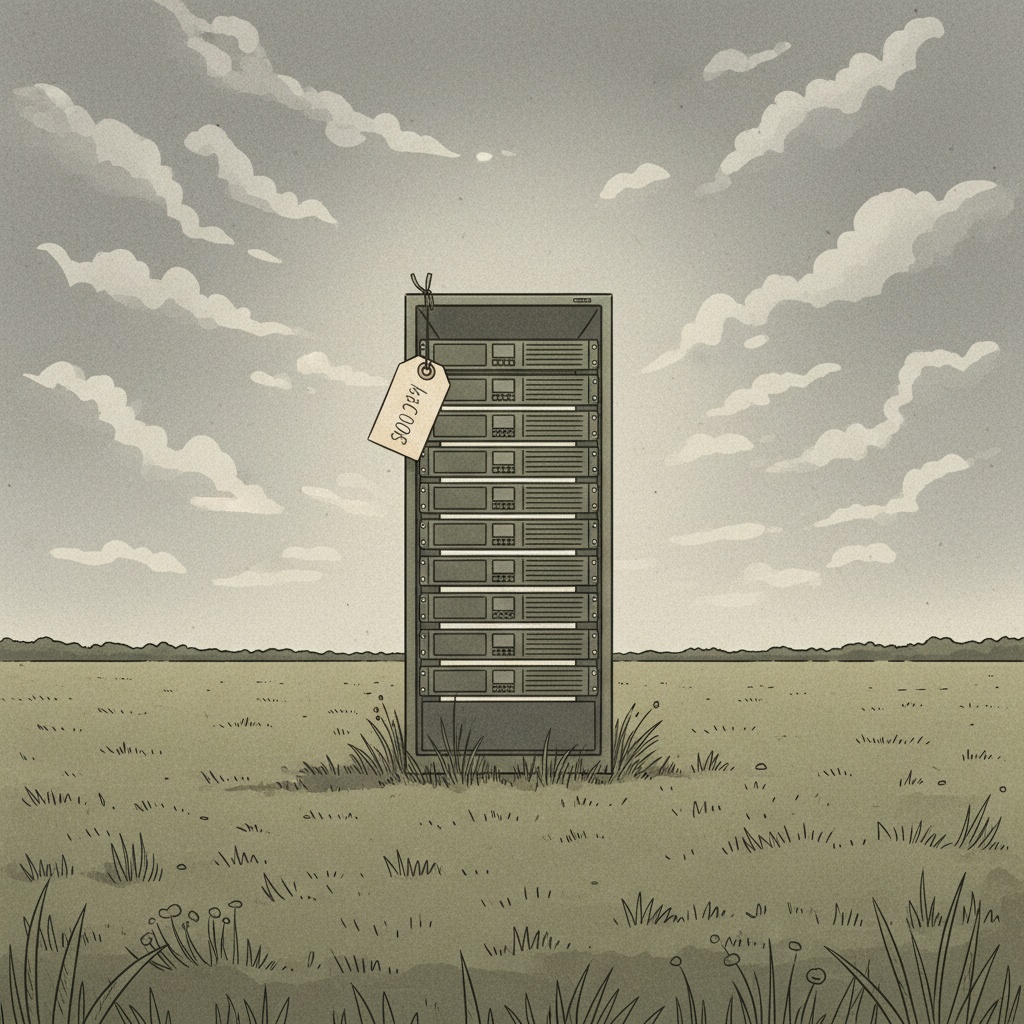
On Monday, June 15, the German hosting company Hetzner—a cult favorite among developers who like their servers bare-metal and their bills under ten euros—pushed through a sweeping price adjustment on its dedicated server portfolio. The cheapest ARM cloud instance, the CAX11, went from €3.29 to €4.49 per month in the German and Finnish data centers. That’s a 36% bump on the entry-level SKU. The mid-tier dedicated boxes climbed by €20 to €30 a month. The company framed it as a standardization effort: fewer configurations, fixed RAM-and-storage bundles, components sourced at prices that no longer flatter the buyer.
The developer forums erupted, as developer forums do. A Hacker News thread gathered 353 points and over 500 comments in a day. The consensus lament is predictable: Hetzner was the last honest vendor, and now even they’ve been swallowed by the same component-shortage monster that’s been squeezing every hardware business since the pandemic.
That consensus is wrong. Or, more precisely, it mistakes the proximate cause for the real one. RAM prices and SSD availability are genuinely tight—Hetzner’s FAQ says so, and they’re not lying. But pointing at the bill of materials misses what actually happened here. Hetzner didn’t raise prices because components got expensive. Hetzner raised prices because it finally admitted that infrastructure sold below cost to acquire users is a subsidy, not a strategy, and subsidies have to end eventually.
The Developer Acquisition Subsidy Was Always a Time-Bomb
For the better part of a decade, the cloud market—from hyperscalers on down to scrappy European hosters—operated on an implicit bargain: get developers in the door with cheap compute, build switching costs around the toolchain, then figure out unit economics later. AWS gave away free tiers. DigitalOcean ran a content-marketing machine so generous it practically doubled as a technical education nonprofit. Hetzner sold entire dedicated servers for less than the cost of a Berlin lunch.
This worked because capital was free and growth metrics were the only metrics that mattered. Venture-backed startups needed users; bootstrapped hosters needed volume. Everyone was happy to run compute at or below marginal cost because the alternative—charging what it actually costs—meant slower growth, and slower growth meant you lost the narrative.
Monday’s price adjustment is the moment Hetzner quietly conceded that narrative no longer works. The company isn’t public; it doesn’t have VC breathing down its neck. It doesn’t need to justify a valuation multiple. And yet it still raised prices 36% on the entry tier while simultaneously restricting configuration options—removing the very flexibility that made it appealing to the tinkerer crowd in the first place. That’s not a supply-chain move. That’s a business-model correction. When even the frugal Germans decide the old pricing doesn’t add up, the subsidy era is genuinely over.
What the Forum Backlash Is Really About
Read the Hacker News thread and you’ll notice something: the angriest commenters aren’t angry about the absolute price. They’re angry about the loss of configurability. Hetzner’s new “standardized” portfolio means up to three fixed RAM-and-storage bundles per machine line, drawn from the configurations that represent 90% of orders. The weird builds—the ones with lopsided RAM and minimal storage, the Frankenstein boxes people used for niche workloads—are being retired.
There’s a genuine loss here, and it’s not about money. The developers who chose Hetzner over AWS didn’t do it just to save a few euros. They did it because Hetzner let them make precise, opinionated trade-offs about their infrastructure that the hyperscalers abstracted away. A developer at a small SaaS company in Leipzig told me over Slack on Monday: “I don’t mind paying €4.49. I mind that I can’t drop the SSD for more RAM.” That’s the real grievance. The price increase stings, but the standardization—the movement toward hyperscaler-style preset menus—is what feels like betrayal.
Hetzner is betting, probably correctly, that the 90% of customers who never touched the exotic configs won’t care. But the 10% who did are the same people who’ve spent years on forums and social media evangelizing Hetzner as the antidote to Big Cloud. Alienate your most vocal advocates and you save margin in the short term. Whether you save your reputation is a different question.
We Got Spoiled, and the Correction Won’t Be Gentle
None of this is to say the complaints are illegitimate. A 36% overnight increase on a low-end SKU is a real hit for solo developers and tiny startups that budget to the cent. But the broader context is worth stating plainly: Hetzner’s previous pricing was an artifact of a specific macroeconomic moment that no longer exists. Interest rates are no longer zero. Hardware supply chains, especially for RAM and flash, have been structurally stressed by AI-training demand that shows no sign of abating. Running servers costs more than it did in 2020, and pretending otherwise only works for as long as someone is willing to eat the difference.
Hetzner didn’t create that reality, but it did exploit it—offering prices that made it the darling of the indie developer world precisely because those prices weren’t sustainable forever. The bill has arrived. The interesting question isn’t whether a €3.29 cloud server was ever a durable offer. It’s whether the developers who built on that premise have backup plans, and whether the next generation of infrastructure startups will be built on honest pricing from day one—or just a different subsidy that has yet to run out.