On Thursday, Waymo announced a new $29.99-a-month subscription tier called Waymo Premier, rolling out first in San Francisco, Los Angeles, and Phoenix. The perks are the kind of thing that makes product managers nod approvingly: 10% cash back on every trip, five free cancellations a month, and “even more” cash back during surge periods. At three times the price of Uber One, it looks like a straightforward loyalty play — reward your heaviest users, lock in recurring revenue, move on.
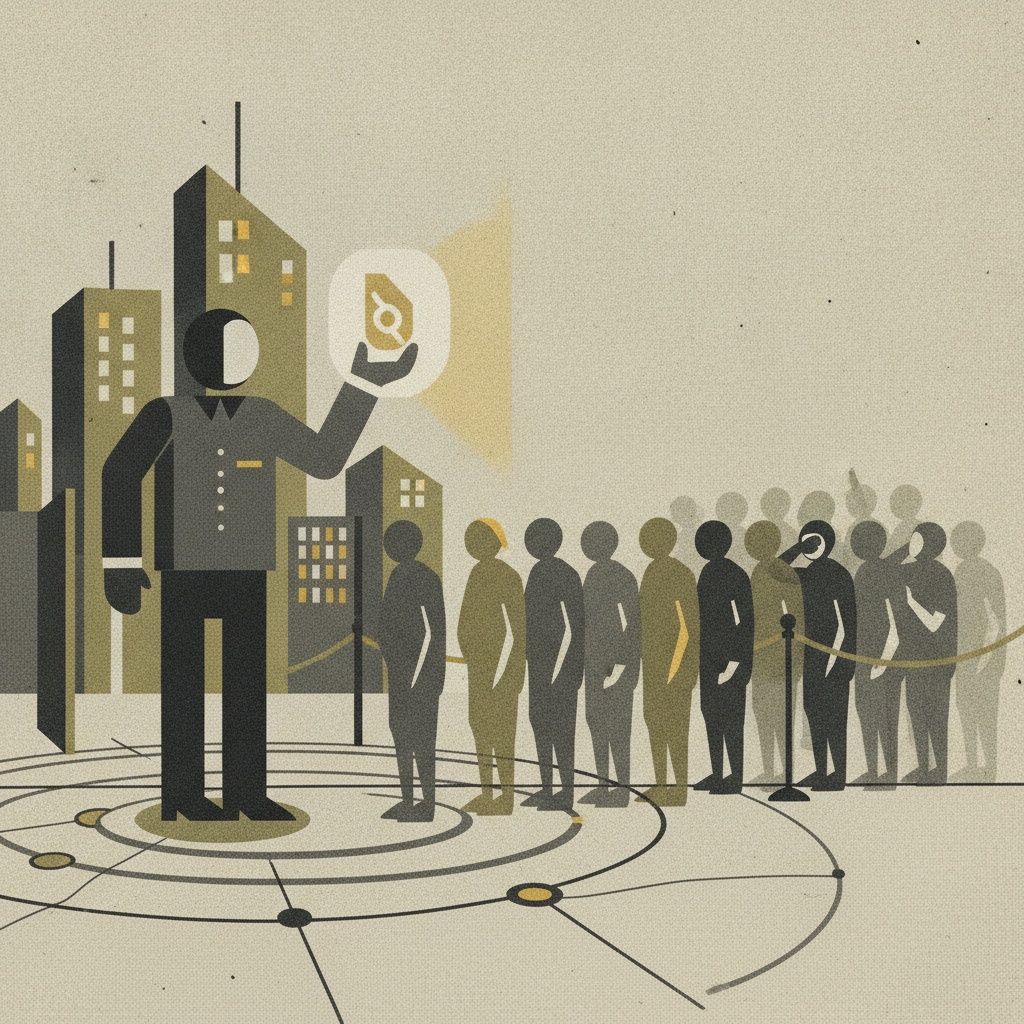
But buried in the announcement is a feature that doesn’t fit the loyalty-program frame at all: Premier members will be able to hail a robotaxi in cities where the service still has a waitlist.
That is not a perk. That is a classification system.
The Waitlist Is Not a Technical Problem
Waymo currently operates in 10 cities: Austin, Atlanta, Miami, San Diego, Seattle, and the three launch markets, plus two others. In several of those, you cannot simply open the app and hail a ride — there’s a waitlist. The company frames this as a scaling constraint. They can only deploy so many vehicles, safety validation takes time, demand management is prudent.
All of that is true. It is not the whole story.
Waitlists in the ride-hail world exist because the alternative — letting anyone with a phone summon a car — requires regulatory permission that cities do not hand out quickly. Municipal governments ask questions about traffic impact, curb management, accessibility, labor displacement. The waitlist is, in part, Waymo’s way of saying we’re not fully open here yet because the grown-ups haven’t finished arguing about it.
So what does it mean when Waymo now says: for $29.99 a month, you can skip that line?
It means the constraint was never purely operational. If it were, you couldn’t pay your way past it. What Waymo has done, perhaps without fully saying so, is attach a price tag to regulatory restraint itself. The cities haven’t said yes to unlimited deployment — but they haven’t said no to a tiered-access model either, and Waymo just walked through the gap.
The Two-Class City Arrives Quietly
Consider the rider experience in a waitlisted city starting this month. You open the app. You’re not a Premier subscriber. You see a screen that says, essentially, “we’ll let you know when we’re ready.” Your neighbor, who pays the monthly fee, opens the same app and gets a car.
This is not surge pricing or priority matching during high demand — those are about allocating scarce supply when everyone has baseline access. This is about access itself. The base tier in these cities is not degraded service; it is no service. The subscription converts a binary gate (you’re in or you’re out) into a paid gate (you’re in if you pay).
There is a term for this, and it’s not “loyalty program.” It’s a private toll road on public infrastructure.
One municipal transportation planner, standing outside a city council hearing in a waitlisted market who agreed to speak without attribution, put it plainly: “They’re building the two-class system before we’ve even finished debating whether there should be one class at all. By the time we rule on it, the paid tier will have thousands of riders. Try taking that away.”
That’s the strategic logic. Waymo isn’t waiting for permission to tier access — it’s tiering access first and daring regulators to unwind it after the fact.
The Real Money Isn’t the $29.99
At $29.99 a month, with perhaps a few hundred thousand subscribers across 10 cities, Premier isn’t going to move the needle on Alphabet’s income statement. The cash-back liability probably eats a decent chunk of the subscription revenue anyway, especially among frequent riders.
No, the value here is structural. Waymo is learning who will pay for priority, in which cities, at what price point — before the regulatory framework around robotaxi access has hardened. When city councils eventually sit down to write the rules about waitlists, equity, and service minimums, Waymo will have a database of paying customers who have already experienced two-class access and don’t want to lose it. Those customers become, intentionally or not, a constituency.
This is not a criticism of the business logic. It’s very good business logic. But we should be clear-eyed about what it is. Waymo Premier is not a loyalty program with a waitlist-skip feature tacked on. The waitlist-skip is the program. The cash back and free cancellations are packaging — the familiar loyalty-program wrapper that makes a more significant structural move look like a routine product update.
Who Gets to Move Through the City?
The debate about autonomous vehicles has spent years focused on safety, labor, and congestion. Those are real questions. But the subtler question — and the one Waymo Premier forces — is about the architecture of urban access itself. When a private company controls the dominant means of getting around a city, and that company introduces a paid tier that determines whether you can get a ride at all, the distinction between a transportation provider and a gatekeeper starts to dissolve.
Uber and Lyft never had waitlists in new cities. They launched illegally, fought the regulators, and won. Waymo is taking the more patient, more legally compliant path — but it’s building the tollbooth before the road is finished, and it’s selling passes.
The Premier program went live yesterday. The cities where it operates haven’t said a word about it yet. That silence won’t last.