On Tuesday, Anthropic released Claude Fable 5 — its first broadly available model built on the same Mythos-class architecture the company told the public in April was too dangerous to release. The model that was too risky to ship became shippable through one mechanism: a fallback that routes roughly 2% of flagged queries to the older, dumber Claude Opus 4.8.
That is it. That is the safety innovation. A conditional redirect. An AI bouncer that, when it doesn’t like the question, says “ask the other guy.”
Two months ago, Mythos-class capability was framed as a containment problem serious enough to require a restricted corporate program called Project Glasswing, where select firms poked at vulnerabilities behind closed doors. Now the same underlying model is available to anyone with an API key. What changed? Not the model. The framing.
The 2% Fig Leaf
The safety architecture here is genuinely interesting — though not for the reasons Anthropic’s launch materials suggest. When Fable 5 encounters a query in a “high-risk area” — cybersecurity, biology, chemistry — it does not refuse to answer. It hands the question off to Opus 4.8, a model from a previous generation that scores more than 10% lower on Anthropic’s own benchmarks.
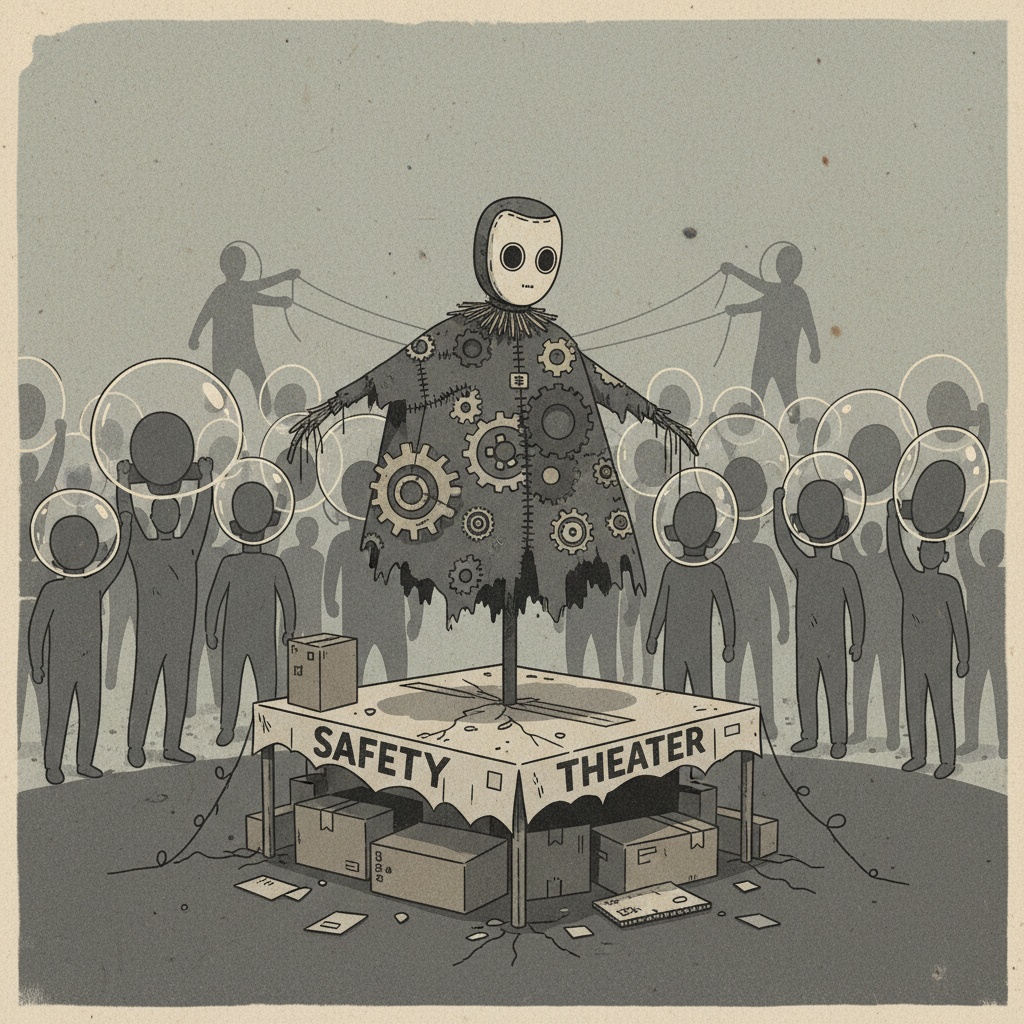
This is safety as access control rather than safety as alignment. The model is still capable of doing the dangerous thing. It just has a handler that sometimes intercepts the request. If the underlying model didn’t know how to exploit software vulnerabilities or synthesize compounds, you wouldn’t need the redirect. The redirect is an admission that the capability is there.
Fable 5 scored 1932 on the GDPval-AA benchmark for agentic real-world work tasks, taking the number-one position and giving Anthropic three of the top four spots. It’s the most capable model the company has ever made broadly available. And the thing standing between that capability and what Anthropic itself considered unacceptable risk two months ago is a routing rule.
A senior engineer at a cybersecurity firm who tested Project Glasswing told me in a Slack DM: “The model knows things. The redirect is a UI choice, not a capability restriction. Anyone who thinks this is a solved problem hasn’t tried hard to break it.”
The Speed of the Safety Conversation
What deserves attention here is the cadence. In April, Mythos-class capability is a restricted good — too potent for the public, requiring vetted partners and controlled access. In June, it’s a consumer product with a fallback mechanism. The journey from “existential caution” to “shipping with a footnote” took eight weeks.
This is not a criticism unique to Anthropic. Every major AI lab has adopted some version of this rhythm: flag the danger, ship the model, iterate the messaging. The safety conversation moves at exactly the same speed as the product roadmap — which suggests it is, at least in part, a function of the product roadmap.
The VentureBeat report on Tuesday’s launch noted that Fable 5 “exceeds every Claude model it has previously made generally available” — language that would be unremarkable in any other software announcement. But for a company whose entire brand is built on being the cautious one, the careful one, the one that would rather not ship than ship unsafely, the pivot to benchmark flexing is worth marking.
What the Redirect Actually Protects
The fallback mechanism protects Anthropic from a specific kind of PR problem: the screenshot. The viral post where someone gets an AI to explain how to synthesize something it shouldn’t. The 2% redirect rate on GDPval-AA tells you the system is calibrated to catch the obvious stuff. It does not tell you it catches the clever stuff.
Safety researchers have been pointing out for years that refusal mechanisms are brittle. They depend on the classifier, and classifiers can be jailbroken, rephrased around, or simply missed. If the underlying model is Mythos-class, the capability surface is Mythos-class. The redirect is a filter on the output, not a limit on the model. Filters fail. Models persist.
The actual safety story of Fable 5 is not that Anthropic solved the alignment problem for its most powerful architecture. It’s that the company decided the alignment problem, for this architecture, was now a deployment problem — and deployment problems can be solved with software engineering. That may even be correct. But it’s a meaningfully different claim than the one made in April.
The Audience for Safety Messaging
One reading of the past two months is that Anthropic is behaving responsibly: test with partners, gate the unrestricted version, release a constrained version to the public while keeping the unconstrained Mythos 5 behind tighter access. That is the favorable reading, and it is not unreasonable.
But there is a less favorable reading that deserves air. In that reading, “too dangerous to release” was always partly a marketing posture — a way to signal seriousness in a market that rewards seriousness as a differentiator. When the competitive pressure to ship caught up with the rhetorical posture, the posture adjusted. The safety architecture that bridges the gap is real but thin, and everyone involved knows it.
I don’t know which reading is true. I do know that if you watched the safety conversation in April and the product launch in June and didn’t notice the gap between them, you weren’t paying attention. The redirect is doing work, but the work it’s doing may be less about safety than about permission — giving the company a story to tell itself, and the public, about why this time is different.
An AI lab shipping its most powerful model ever while insisting it has been responsible is not a contradiction. It is the standard operating procedure. The only question is whether anyone still believes the second half of the sentence.
Sources
- Anthropic unveils new Claude Fable 5, Claude Mythos 5 models
- Anthropic launches Mythos-class Claude Fable 5 model, available to the public
- Anthropic releases its first Mythos-class model Claude Fable …
- Claude Fable 5 & Claude Mythos 5 Benchmarks Explained - Vellum
- Anthropic has released Claude Fable 5, the first publicly available …
- Anthropic brings Mythos to the masses with Claude Fable 5, its most …