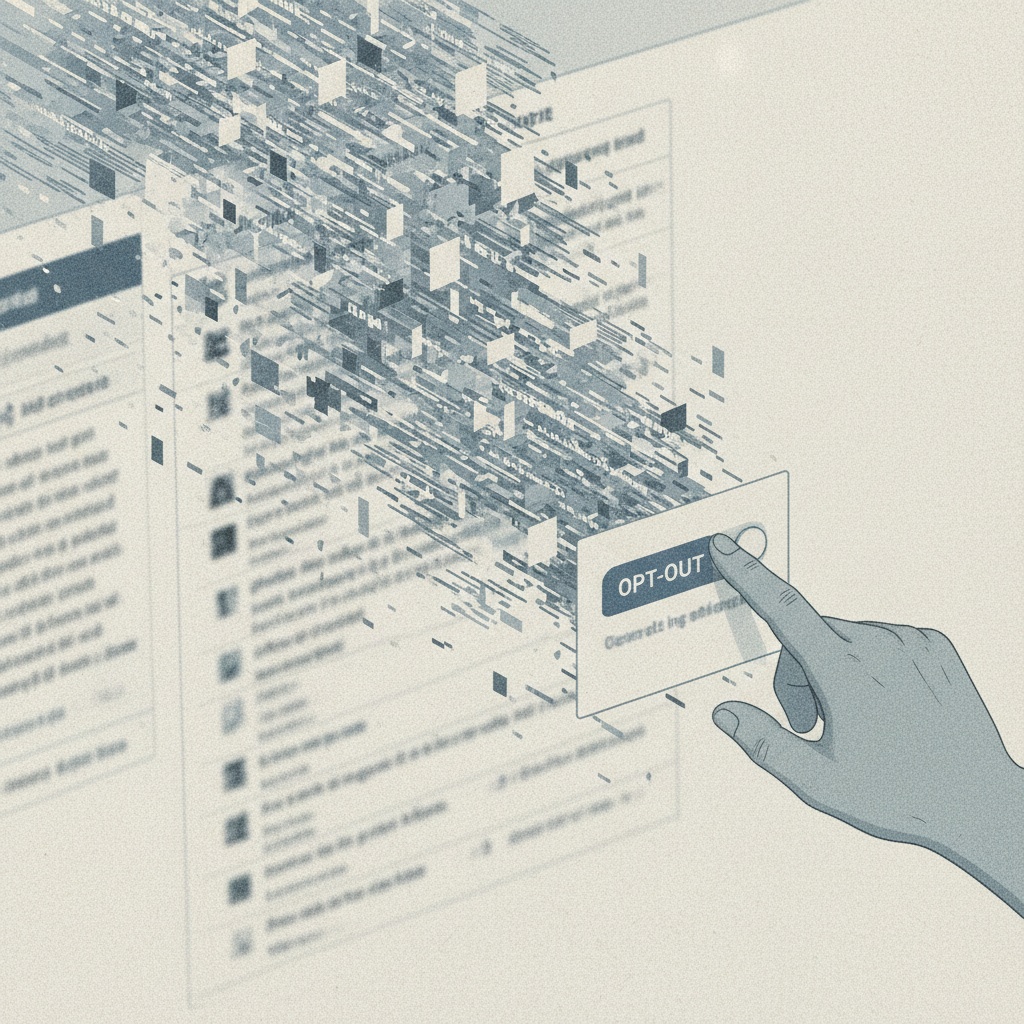
On January 8 of this year, Google announced that its Gemini AI features would be rolling out across Gmail — message summaries, suggested replies, the works — and that some of them would be turned on by default. Three billion users. Opt-out, not opt-in. The blog post that hit the front page of Hacker News this week, “Gmail thinks I’m stupid, so I left,” is the kind of thing you write when you’ve finally had enough of a product that keeps nudging you toward the exit.
The author’s complaint is specific and familiar: Gmail’s AI now auto-generates a summary of every email thread whether you asked for it or not, and the summaries are frequently wrong in ways that matter — mischaracterizing tone, flattening nuance, missing the one sentence in a five-message thread that actually contained the decision. It’s not a bug. It’s the product working as designed, and the design doesn’t care whether you find it useful.
The predictable reaction to this — and you can find it in bulk on the Hacker News thread and across every privacy forum — is that Google violated user trust. That this is surveillance. That opting you in by default is an act of contempt for consent. And sure, all of that is true enough. But it misses the bigger and stranger thing that actually happened.
The Trust Account Is Already Empty
Google didn’t break your trust with this rollout. It couldn’t have. The trust account was drawn down years ago — on data collection, on ad targeting, on the slow creep of features nobody asked for that nonetheless became impossible to disable. What happened in January 2026 wasn’t a breach of faith. It was a straightforward accounting decision.
Think about what it means when a company with three billion users — a number CNBC confirmed in its coverage of the Gemini rollout — decides to make a feature opt-out rather than opt-in. It means the product team ran the numbers and concluded that the number of users who would voluntarily enable AI summaries was too low to justify the launch. Not zero, but too low. The feature needed defaults to reach critical mass. The decision-making wasn’t “will users like this?” It was “what default setting gets us to the adoption curve we promised the exec team?”
This is what mature platforms do. They stop selling to you and start managing you. Every product meeting becomes a conversation about metric-move levers rather than user needs. The question is never “would someone want this?” It’s “what’s the churn risk if we force it on?” And this time, Google’s internal models apparently said the churn risk was acceptable.
The Real Insult Isn’t the AI
If you read the blog post that’s been making the rounds, the author isn’t actually mad about summaries existing. He’s mad about the assumption baked into the feature: that you, the user, can’t be trusted to read your own email. That the three-paragraph thread from your boss or your lawyer or your kid’s school contains too much information for you to process without machine assistance, and so the machine will do you the favor of boiling it down — badly, as it turns out — whether you like it or not.
“It’s like having a co-worker who interrupts every conversation to tell you what they think the other person meant,” said one product designer at a mid-size SaaS company who migrated his personal domain off Gmail last month. We spoke over Signal. He’d stuck with Gmail since 2007. “The summary isn’t the problem. The fact that I can’t say ‘I don’t want this’ without digging through settings menus that change every quarter — that’s the problem.”
The insult, in other words, isn’t technological. It’s relational. Google has stopped treating Gmail as a service you pay for with your attention and started treating it as a surface on which to deploy AI, and your inbox is just the real estate. You’re not the customer anymore. You haven’t been for a while. But now you’re not even really the user — you’re the training environment.
What the Exodus Actually Signals
The people leaving Gmail over this aren’t privacy absolutists. Most of them — the author of the viral post included — are just people who noticed they were being managed instead of served and decided they’d had enough. That’s a different constituency from the ProtonMail-and-PGP crowd. It’s normies. It’s people who would have stayed forever if Google had just left the product alone.
This is the risk that the adoption-optimization playbook doesn’t account for. When you treat defaults as free real estate and every feature as something users will grudgingly tolerate, you’re right — for a while. Most people won’t leave. Most people never do. But the ones who do leave are disproportionately the people who care enough about the product to notice when it changes. They’re your power users. Your early adopters. The people who told their friends to sign up in 2005.
Losing them doesn’t show up in the quarterly engagement numbers right away. It shows up five years later, when the only people still using your product are the ones too checked out to bother switching — and that’s not a user base, it’s a captive audience. Captive audiences don’t generate loyalty. They generate resentment. And resentment, unlike churn, is hard to model in a spreadsheet.
Sources
- Gmail Gemini AI & Email Deliverability in 2026
- AI Spam Filtering in 2026: Gmail & ML Advances
- Google is adding Gemini AI features to Gmail, which now has more …
- Google adds Gemini AI features to Gmail. Users will have to opt out
- If you use GMail, AI (Gemini) was turned on yesterday by default and …