On Monday, a software developer published a blog post titled “Gmail Thinks I’m Stupid, So I Left.” By Tuesday evening it had racked up 681 points and more than 400 comments on Hacker News, the kind of traffic that suggests the author, who writes under the handle moddedbear, struck something closer to a live wire than a nerve.
The complaint was specific. The author opened a feedback email about a project he was working on. Before he could read the message, Gmail served him a language-model summary he hadn’t asked for. The summary wasn’t wrong, exactly. But it wasn’t the message. And the author — like a lot of people who read his post and promptly forwarded it to everyone they know — found this arrangement intolerable. He moved his email to Fastmail.
The response was predictable. Comment threads filled with variations on the same theme: Google treats its users like idiots. The AI slop is inescapable. Another power user flees the walled garden. All true. All missing the more interesting party to this transaction.
The Sender Never Signed Up to Be Summarized
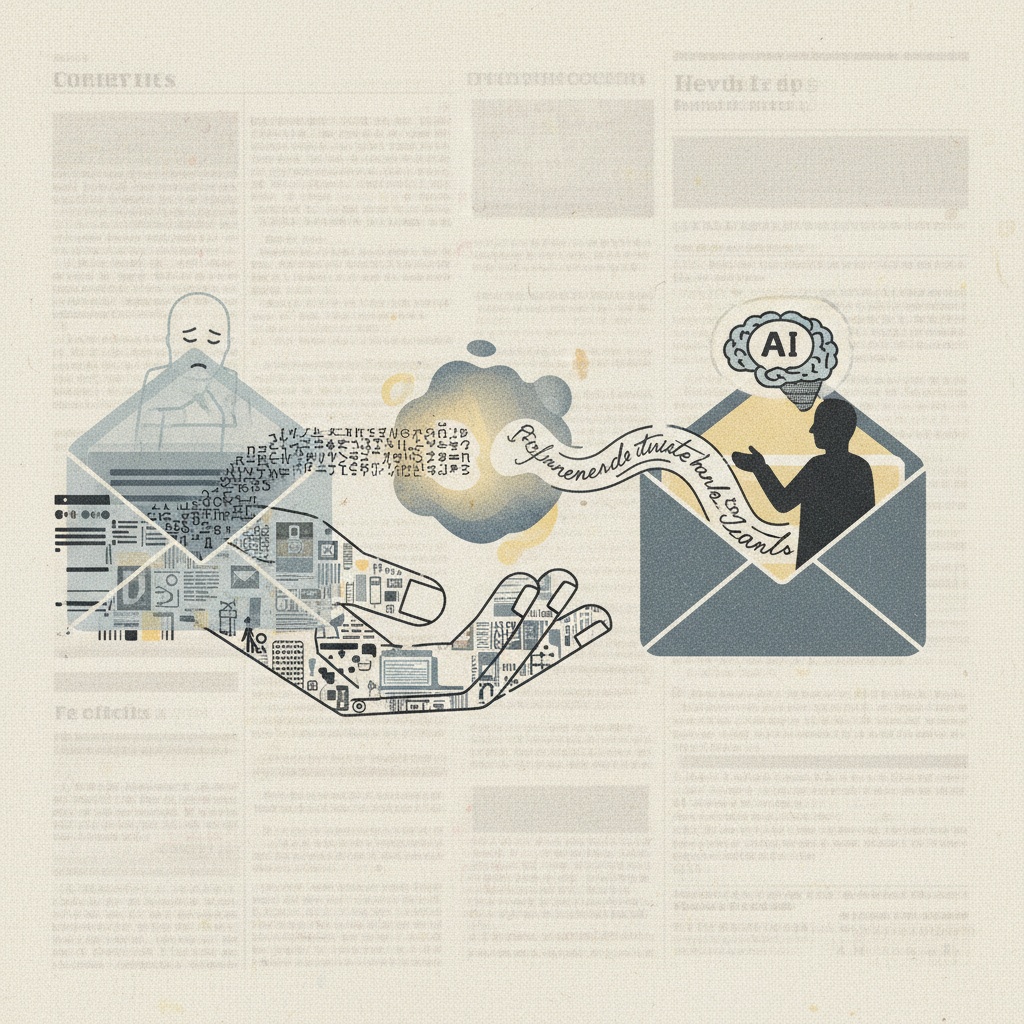
When Gmail inserts a Gemini-generated summary above an email, it is not performing a neutral function like a spam filter, which either delivers the message or doesn’t. It is inserting new text — a generative model’s interpretation — between the sender’s words and the recipient’s eyes. The sender composed a message. The recipient opened what is, functionally, a different document.
This is not a privacy concern in the conventional sense. Nobody is alleging Google secretly reads your email and sells the contents to advertisers — that particular trope has been litigated to exhaustion. The issue is closer to an editorial one. If I write you a careful three-paragraph email and Google condenses it into a single AI-generated sentence before you see it, the document you read bears my name but not my words. I did not authorize the edit. I did not approve the summary. I may not even know it happened.
“I spent twenty minutes on a client email last week and then got a reply that made no sense until I realized the guy had only read the AI summary,” a freelance graphic designer told me in a Slack DM this week. “He literally quoted the summary back to me like it was something I’d written.” The designer asked that I not name the client.
The Email Contract Was Already Fragile
Email has always occupied an odd legal and social space. It is not a private letter in any meaningful sense — any sysadmin along the route can read it, and most employers claim ownership of work accounts outright. But it has historically been treated as a faithful transmission medium. What I type is what you get. The header might be mangled, the formatting might break, but the words themselves travel intact.
AI summarization breaks that contract without replacing it with anything. Google did not announce this change with a terms-of-service update that senders could evaluate. It did not give the person who wrote the email a toggle that says “do not summarize my messages.” It simply inserted a new intermediary into a communication channel that both parties believed was direct. The hubris is not that Google thinks recipients are stupid. The hubris is that Google thinks the relationship between sender and recipient is its to mediate — and that neither party needs to be asked.
This is not an argument about AI quality. Even if Gemini summaries were flawless — and the moddedbear post makes clear they often aren’t — the structural problem would remain. The sender’s autonomy over their own words has been silently downgraded from a feature of the medium to a setting Google controls.
The People Who Stay Won’t Notice What They Lost
Google announced the AI Inbox feature set in January, according to coverage at the time. The tools include thread summarization, priority inbox reordering, and AI-assisted reply drafting. Google described the features as optional, which is technically true if you define “optional” as “you can turn off the display of summaries after you discover they exist and locate the setting.” The moddedbear post suggests that for many users, the discovery came as an unwelcome surprise.
The people most likely to notice and object — developers, writers, anyone whose work depends on precise language — are also the people most likely to leave. That leaves behind a user base that never questioned the summaries in the first place, or that finds them genuinely helpful. Either way, the medium shifts. A generation of email users will grow up never having read a raw message from a colleague. They will have read what Gemini thought the colleague meant. The distinction will not occur to them because they were never shown the alternative.
That is not a failure of AI. It is a failure of product design that confuses mediation with improvement. A good tool makes the user more capable. A bad tool makes the user unaware of what the tool is doing. Gmail’s summaries belong to the second category not because the AI is bad — though it sometimes is — but because the design hides the edit.
The people leaving Gmail this week aren’t Luddites. They’re people who noticed that someone else was rewriting their mail.
Sources
- Tech Daily 24/7 (@tech.daily24) • Instagram photos and videos
- ソフトアンテナ (@softantenna) / Posts / X
- Gmail Thinks I’m Stupid, So I Left - moddedbear.com
- How Gmail’s Gemini AI Changes Email Deliverability in 2026 - Folderly
- Gmail is changing in a major way. Here’s what users must decide
- Gmail is making a major change. Here’s what users must decide