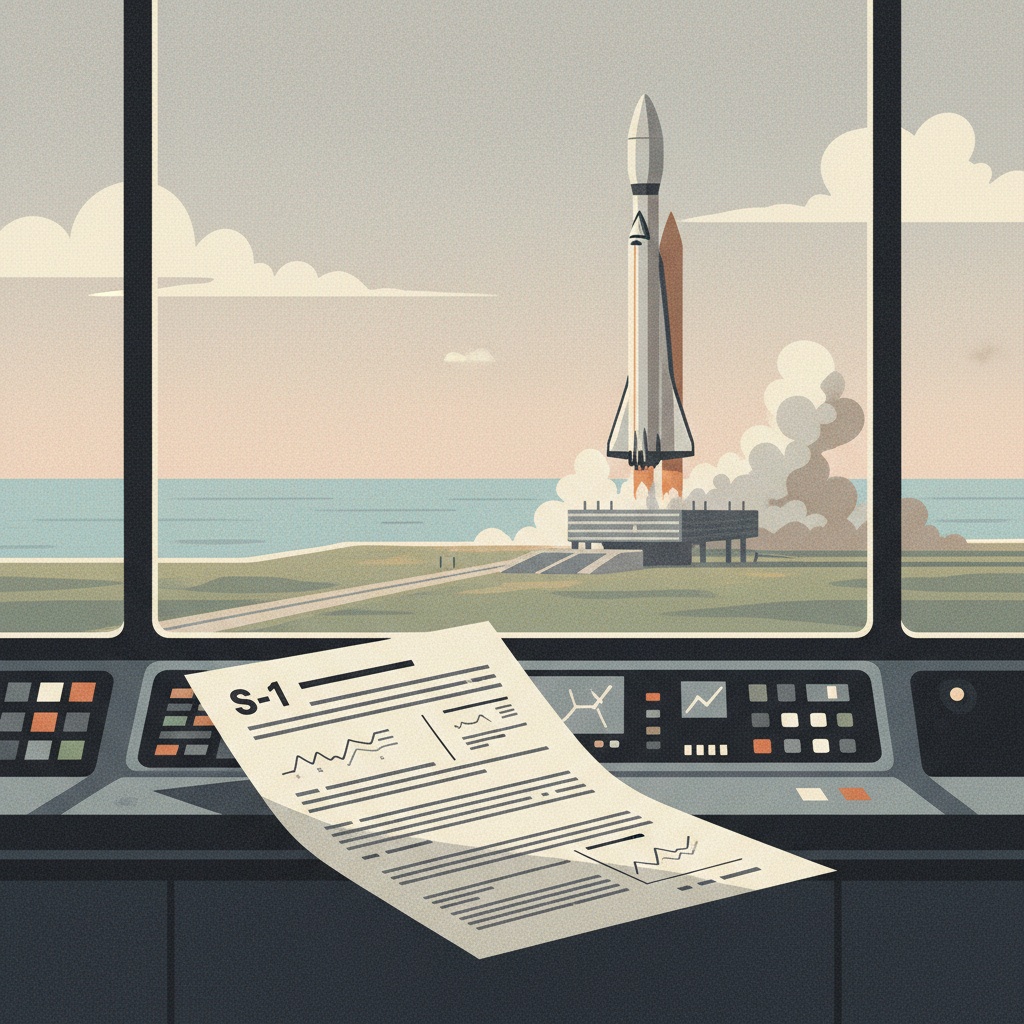
SpaceX launched its first Starship V3 prototype from Starbase, Texas on Friday evening, May 22. The upper stage survived re-entry. Several engines failed. The booster landed in the Gulf. The company called it a success. The headlines called it mixed. And three days earlier, SpaceX filed its S-1.
The IPO prospectus landing in the same calendar week as the company’s most ambitious — and visibly imperfect — test flight is not a coincidence. It is a signal. And the signal is not about technical readiness. It is about who pays for the next decade of explosions.
The S-1 Didn’t Wait for a Clean Flight
SpaceX has been private for 24 years. It has raised billions from venture capital, sovereign wealth funds, and Elon Musk’s personal fortune. It has blown up rockets on YouTube and turned those clips into recruitment ads. The private-market story has always been: we iterate in public, we fail fast, and the failures are proof we’re moving faster than anyone else.
That story works when your investors are accredited, concentrated, and bought in on the vision. It works differently when your shareholders are retail investors checking their portfolios on an iPhone during a coffee break.
Friday’s flight lost multiple Raptor engines during ascent. The upper stage tumbled before recovering attitude control. The booster performed a water landing rather than a catch. By SpaceX’s own historical standards, this was a solid day at the office. By the standards of a company that just told the SEC it intends to sell shares to the public, it was a reminder that the core product is still in beta.
SpaceX chose not to wait for the clean flight. That choice is worth understanding.
The Capital Math Has Shifted
Starship is expensive. The V3 vehicle is larger, uses more engines, and requires entirely new ground infrastructure — including a second launch pad at Starbase, which saw its debut attempt scrubbed on May 21 before Friday’s flight went from Pad 2. The company has a NASA contract to land astronauts on the moon by 2028, a Starlink constellation that demands heavy-lift cadence, and a Mars architecture that requires orbital refueling missions numbering in the dozens per crewed flight.
Private capital markets have cooled since 2021. Late-stage funding rounds are no longer infinite. The IPO is not an exit — it is a funding round, and the timing suggests SpaceX needs it before Starship is proven, not after.
One former engineer who worked on the Starlink deployment team put it in a Slack DM this week: “If the S-1 waited until after three clean V3 flights, it would’ve been 2028. The market window doesn’t stay open that long.”
He is probably right. The window for a high-multiple space hardware IPO is narrow. Interest rates are no longer zero. Competitors — Blue Origin, Rocket Lab, a resurgent ULA — are eating into the narrative of inevitability. The Artemis program faces perennial congressional budget fights. SpaceX cannot afford to wait for perfection.
What Public Investors Are Actually Buying
A SpaceX IPO will not sell shares in a rocket company the way Apple sells shares in a phone company. It will sell shares in a logistics-and-communications conglomerate whose flagship product is still in flight test. Starlink provides real revenue — reportedly north of $6 billion annually as of late 2025. But Starship is the growth story, and Starship is not done.
The S-1 will disclose risk factors that include vehicle loss, regulatory delay, and the possibility that orbital refueling — the linchpin of the entire beyond-low-Earth-orbit strategy — does not work at scale. These are not hypothetical risks. Friday’s flight demonstrated them in public view.
And yet: the offering will be oversubscribed. The brand is too strong, the track record too compelling, the secular trend toward space-based infrastructure too real. The question is not whether people will buy. The question is whether they understand what they are buying.
The Public Gets the Iterations, Too
The private SpaceX could blow up a Starship and call it data. The public SpaceX will blow up a Starship and issue a press release before the market opens, because the stock will move on whether the vehicle cleared the pad. Every scrub, every engine-out, every lost upper stage becomes a material event — not just a milestone.
This is not an argument against going public. It is an argument that the going-public moment was deliberately chosen to coincide with a phase of the program where failure is still frequent, because that is the phase where private capital was running thin and public capital had to step in.
The technical story of the V3 flight is that SpaceX can build a bigger rocket and fly it most of the way through the envelope. The financial story is that they filed the paperwork before the rocket was ready, because they needed the money to finish it. That is not reckless. It is disclosable. And now it will be.
Sources: CNN, CNBC, The New York Times, Spaceflight Now
Sources
- SpaceX targets May 19 for debut of Starship Version 3, Launch Pad 2
- May 21, 2026 - SpaceX scrubs Starship V3 launch attempt | CNN
- Starship V3 Launch Schedule - RocketLaunch.org
- Highlights: SpaceX Starship finds mixed success in V3 debut
- SpaceX will retry Starship test flight after scrubbing prior launch - CNBC
- SpaceX Completes Mostly Successful Starship Rocket Flight