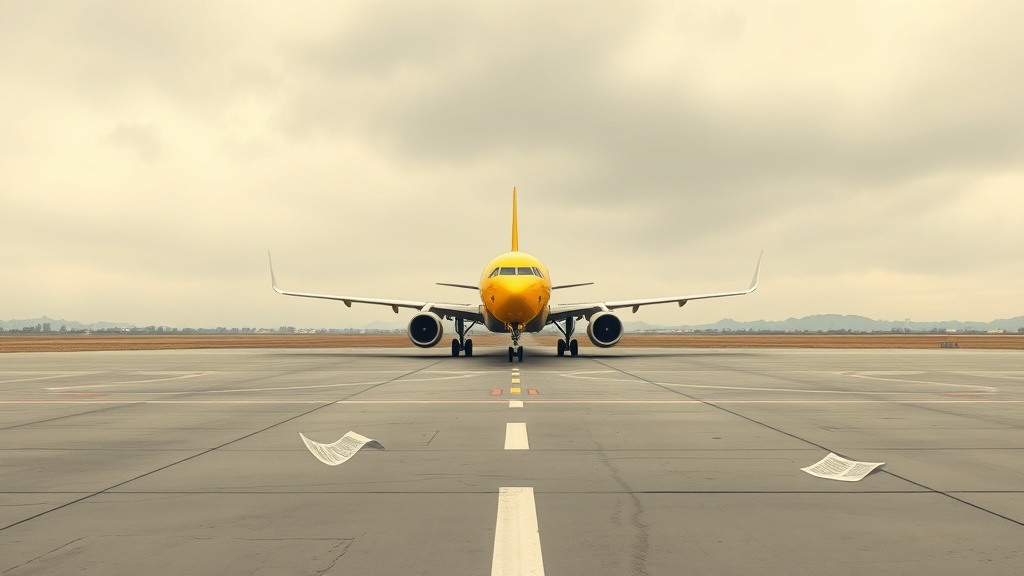
Some airlines earn your loyalty with champagne and lie-flat seats. Others earn your tolerance with $39 fares and a carry-on policy that treats a backpack like contraband. Spirit Airlines, that retina-searing yellow beacon of the ultra-low-cost sky, has spent two decades perfecting the art of getting what you pay for—which apparently wasn’t enough, because the company just filed for Chapter 11 bankruptcy protection for the second time in under a year.
A “Chapter 22” in the Making
The airline emerged from its first restructuring in March 2025, blinking into the sunlight after swapping $795 million in debt for equity. As CNBC reported, the deal trimmed the balance sheet but left the business model largely untouched—no meaningful fleet reduction, no dramatic route contraction, no soul-searching about whether Americans still wanted to fly in an airborne penalty box. By August, Spirit was back in bankruptcy court, earning itself the finance world’s grim nickname: a “Chapter 22.”
You don’t stumble into a second bankruptcy in five months by accident. You do it with commitment.
A former operations manager at a competing low-cost carrier put it to me this way over coffee in Dallas: “They thought the problem was the spreadsheet. Turns out it was the product.” He asked that I not use his name, mostly because he still has to work with Spirit’s lessors and would prefer not to become a trivia answer in their next creditor meeting. But his point stands. The first bankruptcy tackled debt. The second, one hopes, might tackle reality.
The Cruel Math of the Middle
Spirit occupies a uniquely uncomfortable position in American aviation. It is neither Southwest-cheap nor Delta-reliable. It doesn’t have the fortress hubs of the legacy carriers or the ruthless efficiency of Allegiant’s point-to-point leisure model. What it has is bright yellow paint, aggressive pricing, and a reputation for ancillary fees so layered they require a spreadsheet to untangle.
That model worked—until it didn’t. The airline had lost more than $2.5 billion since 2020 before its first filing, according to Financier Worldwide. Inflation-weary travelers who once toleratedSpirit’s cramped cabins for a bargain found themselves priced into the same bracket as Southwest or Frontier, carriers that at least pretend dignity is part of the package.
And then there’s the matter of the failed merger. Remember the Spirit-Frontier deal? Dead on arrival after JetBlue swooped in with a hostile bid that the DOJ later swatted away. That left Spirit holding an empty dance card, a fleet of Airbus narrow-bodies it couldn’t fill profitably, and a route network optimized for a consolidation that never arrived.
What the Experts Won’t Say
The restructuring consultants and bankruptcy attorneys will talk about “right-sizing the enterprise” and “optimizing the capital structure.” What they mean is layoffs, parked planes, and fewer cities served. Spirit has already signaled it will slash its fleet and flight schedule as part of the second filing. CNBC noted the airline is aiming to emerge by spring—though spring of which year feels like a question the company should probably answer with more specificity.
What most of the analysis misses is the cultural question. Spirit spent years training American flyers to equate the brand with discomfort. That is a hard narrative to unwind, even withChapter 11’s legal magic wand. Brand rehabilitation is not a line item on a restructuring worksheet. No amount of debt-for-equity swapping turns a cramped 28-inch seat pitch into a fondmemory.
The Yellow Warning Light
There is a broader lesson here for anyone who cares to look. Spirit Airlines is the canary in thecoal mine for the U.S. aviation sector’s mid-tier—those carriers too small to command fortress hubs but too large to survive on beach-town vacation routes alone. If fuel stays elevated andlabor costs keep climbing, the squeeze will move upmarket. Today’s ultra-low-cost crisis becomes tomorrow’s boutique carrier collapse.
For now, Spirit soldiers on, legally shielded and operationally diminished, a testament to the durability of American corporate life support. The flights still operate. The fees still accumulate. The planes remain aggressively, unforgettably yellow.
But bankruptcy court, unlike Spirit’s boarding process, does not offer a cheaper option if you arrive late. The airline has used its second chance. A third would require not just restructuring but resurrection—and even the most patient judge knows the difference.
Sources
- Spirit Airlines faces a major restructuring, possibly in bankruptcy
- Spirit Airlines’ Second Bankruptcy: Filing Details and Frontier …
- Spirit Airlines Faces Debt Reduction In Bankruptcy Restructuring
- Spirit files for second Chapter 11 bankruptcy — Financier Worldwide
- Spirit Airlines files for Chapter 11 bankruptcy again
- Spirit Airlines plans to slash flights, fleet in bid to emerge from …